When people think about health metrics as they age, they often focus on cholesterol, blood pressure, or body weight. While these are certainly important, one of the most critical indicators of long-term vitality is frequently overlooked: skeletal muscle mass. Muscle is much more than just the tissue that helps you lift heavy objects. It is a highly active, metabolic organ that may significantly influence how well your body functions, recovers, and navigates the aging process.
Many individuals accept physical decline as an inevitable part of getting older. However, taking a proactive approach to your body composition can change that trajectory. In this article, you will learn why preserving and building lean muscle is essential for your future self.
Specifically, we will explore:
- How muscle supports metabolic health and overall mobility.
- Why age-related physiological changes make muscle maintenance more challenging.
- Actionable strategies involving nutrition, strength training, and recovery.
- The importance of personalized health strategies and clinical oversight.
Please note: This article is for educational purposes only. Individual needs, outcomes, and medical suitability vary. Any clinical strategy should be guided by qualified professionals and tailored to the individual.
What Muscle Mass Actually Does for Your Body
Muscle tissue is intricately connected to nearly every system in your body. Viewing it merely as an aesthetic feature misses its profound biological role.
Maintaining adequate lean mass has been associated with improved quality of life and better long-term health outcomes.
Muscle Supports Metabolic Health
Skeletal muscle is one of the primary sites for glucose disposal in the body. When you consume carbohydrates, your body breaks them down into glucose, which your muscles absorb and use for energy. Higher amounts of muscle mass may contribute to better insulin sensitivity, meaning your body can manage blood sugar levels more efficiently.
Furthermore, muscle tissue is metabolically expensive. It requires energy to maintain, which means individuals with more lean mass generally have a higher resting metabolic rate. This may contribute to a healthier body composition and make it easier to maintain energy balance over time.
Muscle Enhances Mobility and Independence
As you age, the ability to perform daily tasks, like carrying groceries, climbing stairs, or simply getting up from the floor, depends heavily on your physical strength. Muscle mass provides the structural support your joints need to function correctly.
A strong muscular system has been associated with better balance, stability, and coordination. This is particularly important because maintaining mobility is a cornerstone of independence in later decades. Strong muscles may contribute to a reduced risk of falls and injuries, allowing you to stay active and engaged in the activities you love.
Muscle Contributes to Physical Resilience
Life is full of physical stressors, whether it is an unexpected illness, a surgical procedure, or a minor injury. Muscle acts as a reservoir of amino acids, the building blocks of protein. During times of physical stress, your body may draw on these reserves to support immune function and tissue repair.
Individuals with adequate muscle mass often show greater resilience when facing these stressors. Having a strong physical foundation may contribute to faster recovery times and a more robust response to physiological challenges.
The Challenge: Age-Related Muscle Loss
If muscle is so important, why do so many people struggle to maintain it as they age? The answer lies in a combination of lifestyle factors and natural physiological shifts.
Understanding the Aging Process
Starting around age 30, adults may begin to lose a small percentage of their muscle mass each decade if they are not actively working to preserve it. This process can accelerate significantly after age 60. This gradual decline is often accompanied by a decrease in muscle strength and function.
However, this decline is not entirely dictated by age alone. A sedentary lifestyle, inadequate nutrition, and chronic stress often compound the natural biological changes. The phrase “use it or lose it” is incredibly accurate when it comes to lean tissue.
The Impact of Hormonal Shifts
Hormones play a significant role in muscle synthesis and breakdown. As individuals age, levels of anabolic hormones like testosterone, estrogen, and growth hormone naturally fluctuate and decline. These shifts may make the body less efficient at repairing muscle tissue after activity.
For women entering perimenopause and menopause, the drop in estrogen may particularly influence how the body maintains lean mass and distributes body fat. While these hormonal changes present a challenge, they simply mean that your strategies for nutrition and training must become more precise.
How to Preserve and Build Muscle as You Age
The good news is that muscle tissue remains responsive to stimulus at any age. With the right approach, you can preserve and even build lean mass well into your later years.
Prioritize Resistance Training
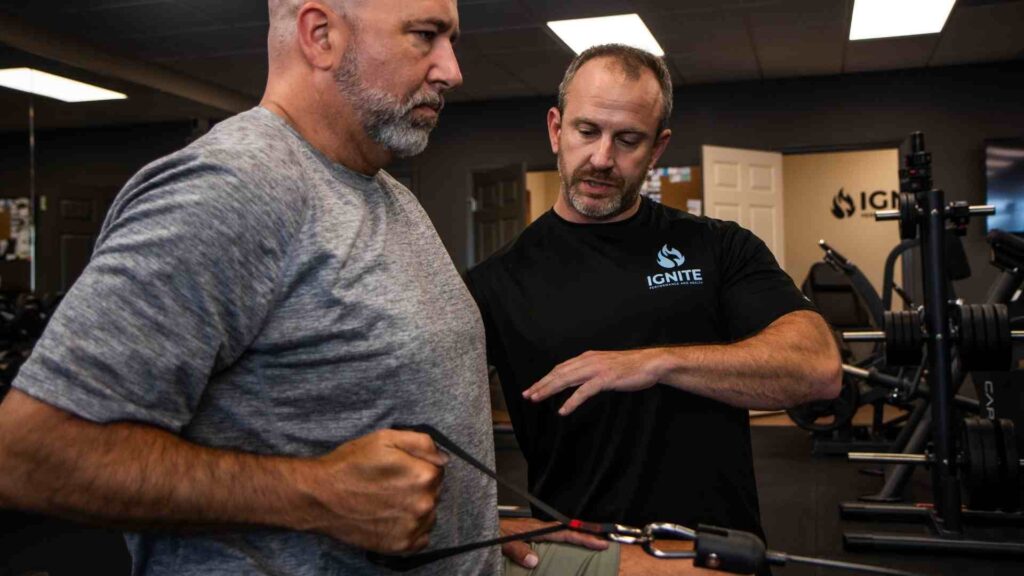
Cardiovascular exercise is excellent for heart health, but it is not sufficient for muscle preservation. Resistance training, lifting weights, using resistance bands, or performing challenging bodyweight exercises is the most effective signal you can give your body to keep its muscle.
When you challenge your muscles with resistance, you create micro-tears in the tissue. The body responds by repairing these tears, making the muscle stronger and more resilient. Aim for a progressive strength training routine that challenges all major muscle groups at least two to three times per week.
Align Nutrition and Protein Intake
Your body cannot build or repair muscle without the right raw materials. Protein provides the essential amino acids required for muscle protein synthesis. As you age, your body may experience “anabolic resistance,” meaning it requires a slightly higher dose of protein to trigger muscle repair compared to when you were younger.
A solid nutritional strategy may include:
- Distributing protein intake evenly across meals, rather than consuming it all at dinner.
- Focusing on high-quality, nutrient-dense protein sources.
- Ensuring adequate overall caloric intake to support your activity levels.
Emphasize Recovery and Sleep
Muscle is not built in the gym; it is built during recovery. When you sleep, your body releases hormones that facilitate tissue repair and growth. Chronically poor sleep has been associated with increased muscle breakdown and elevated stress hormones.
Proper recovery also includes managing daily stress and allowing adequate rest between intense training sessions. Over-training without proper recovery may hinder your progress and increase the likelihood of injury.
Why a Personalized Approach Matters
Generic fitness advice rarely produces optimal results, especially as you age. Your health history, biomechanics, stress levels, and physiological baseline are entirely unique to you.
Individual Variability and Clinical Oversight
What constitutes the right training volume or protein target for one person may be entirely inappropriate for another. Some individuals may have underlying metabolic or hormonal barriers that make muscle retention difficult, despite their best efforts in the gym.
This is where clinical oversight becomes invaluable. A comprehensive evaluation, which may include monitoring body composition, assessing relevant biomarkers, and reviewing lifestyle habits can help identify your specific needs. Working with qualified professionals ensures that your interventions are safe, appropriate, and tailored to your unique physiology.
The Ignite Performance & Health Approach
At Ignite Performance & Health, we understand that healthy aging is not about chasing a number on a scale. It is about building a body that is capable, resilient, and prepared for the demands of life.
We utilize a data-driven, holistic approach to help you optimize your health. By integrating personalized nutrition planning, strategic strength training, and clinical oversight when medically appropriate, we help you focus on the markers that truly matter. Preserving muscle mass is a central pillar of this philosophy.
Take the Next Step Toward Healthy Aging
Muscle mass is an essential marker of healthy aging that may contribute to better metabolic function, sustained mobility, and enhanced physical resilience. While aging introduces new challenges, a proactive strategy can help you maintain your strength and vitality for years to come.
Try this quick self-audit this week:
- Track your protein: For three days, log your meals to see if you are consistently hitting a protein target that supports muscle maintenance.
- Review your training: Are you incorporating progressive resistance training at least twice a week, or is your routine entirely cardio-based?
- Assess your recovery: Are you getting 7–9 hours of quality sleep to support tissue repair?
If you are ready to take the guesswork out of your health strategy, Ignite Performance & Health can help you design a personalized, science-driven plan to support your long-term wellness goals.