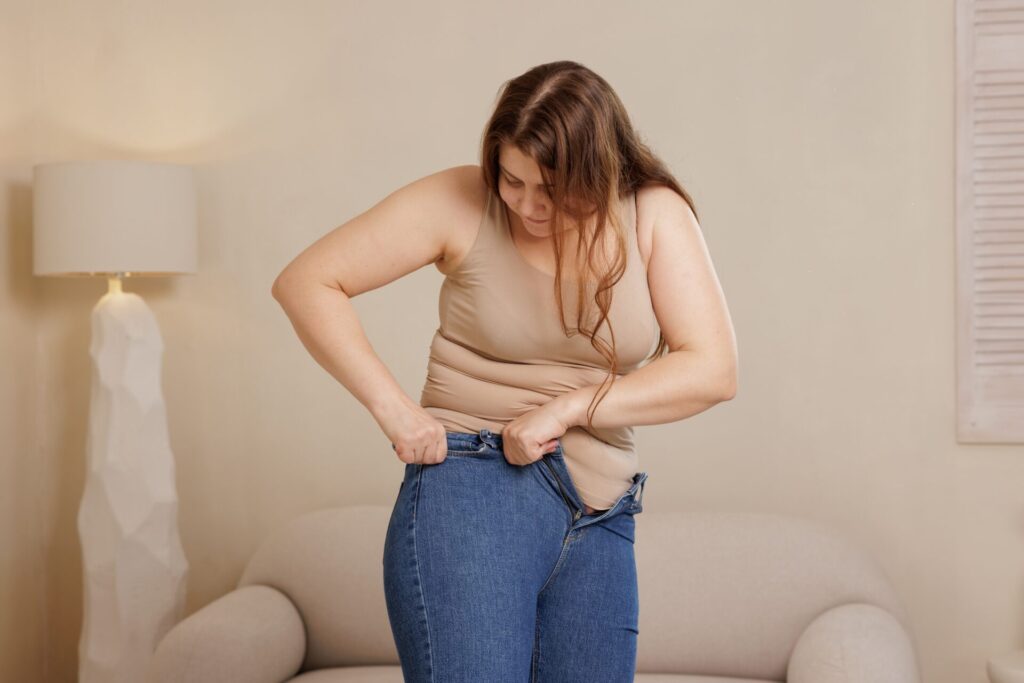
“I didn’t change anything, and the weight just showed up.” It’s one of the most common things women say when weight gain starts during perimenopause or menopause and it’s not just frustration talking. Menopause weight gain genuinely behaves differently than weight gain at other stages of life, which is exactly why the strategies that worked in your 20s and 30s often stop working now.
It’s Not Just “Eating the Same, Gaining More”
During the menopause transition, declining estrogen changes where and how your body stores fat, shifting more of it toward the abdomen rather than the hips and thighs. At the same time, muscle mass naturally declines with age, and since muscle burns more calories at rest than fat does, that loss slows your metabolism even if your habits haven’t changed at all. Mayo Clinic notes that this combination hormonal shifts, muscle loss, and reduced activity is usually what drives menopause-related weight gain, more than any single cause on its own. (Mayo Clinic, The Reality of Menopause Weight Gain)
This is why generic advice like “eat less, move more” often falls flat during this stage. The starting math has changed.
Why the Usual Diet Advice Stops Working
Cutting calories aggressively can backfire during menopause, because it risks losing even more muscle the very tissue you need to protect your metabolism. Structured Nutrition Coaching Chesterfield, MO women rely on during this transition typically shifts the focus toward adequate protein and strength-supporting nutrition rather than restriction, since preserving muscle becomes the priority, not just the number on the scale.
Working with a coach who understands this distinction matters. Real Nutrition Programs Chesterfield, MO patients see results with are built around what your body needs at this specific stage, not a one-size-fits-all calorie target pulled from a generic app.
Hormones Are Part of the Picture, Not the Whole Picture
It’s tempting to blame hormones entirely, but the truth is more nuanced hormonal changes interact with aging, sleep, stress, and activity level to produce the weight gain pattern so many women experience. That’s exactly why an evaluation matters before assuming you know the cause. Comprehensive menopause therapy and relief starts with lab work to understand where your hormone levels actually stand, and effective Menopause Treatments Chesterfield, MO providers offer are built around those numbers rather than a standard protocol applied to everyone.
For many women, this includes evaluating whether hormone replacement therapy is appropriate. Hormone Replacement Therapy Chesterfield, MO patients pursue can help address symptoms like disrupted sleep and hot flashes that, left untreated, make weight management even harder since poor sleep and elevated stress hormones both contribute to abdominal fat storage. True Hormone Optimization Chesterfield, MO care treats hormone therapy as one part of a broader plan, not a standalone fix.
Why Strength Training Matters More Now Than Ever
If muscle loss is part of what’s driving the metabolic slowdown, then rebuilding and preserving muscle is one of the most direct ways to counter it. This is where many women get stuck either avoiding weights out of habit, or not knowing how to train safely and effectively at this stage of life.
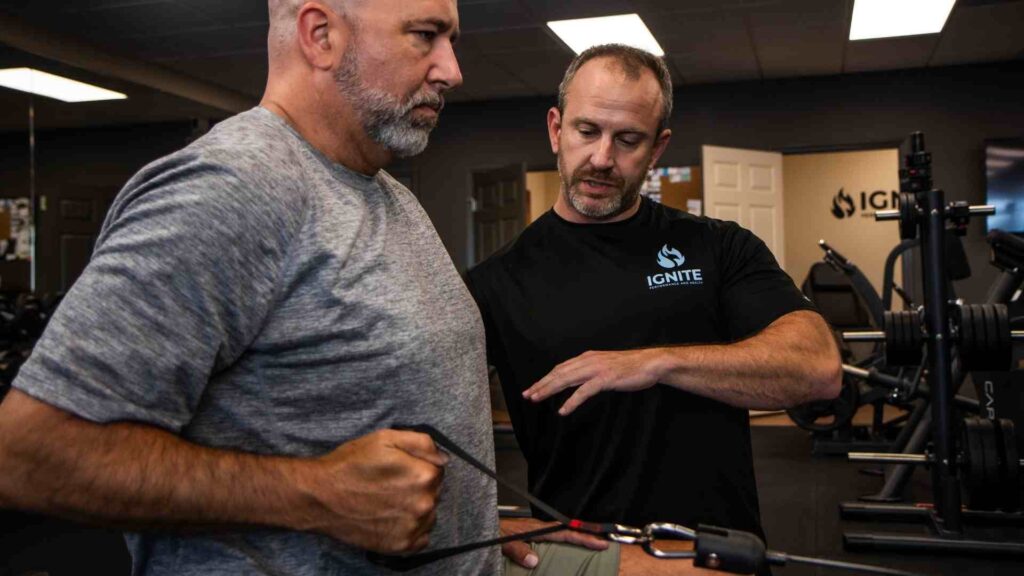
Working with a Personal Trainer Chesterfield, MO women trust to understand menopause-specific programming can make a meaningful difference, since training needs during this transition often differ from a standard weight loss program more emphasis on resistance work, less reliance on high-impact cardio alone. Structured Personal Training Chesterfield, MO sessions can also help protect bone density, which becomes an increasing concern as estrogen declines.
If you’ve searched “personal trainer near me” hoping to find someone who understands this stage of life specifically not just general fitness coaching that distinction is worth asking about directly before you commit to a program.
Medical Weight Loss Tools Can Help, With the Right Support
For some women, lifestyle changes alone aren’t enough to move the needle, and that’s a legitimate reason to explore medical options. A provider-guided Weight Loss Service Chesterfield, MO women trust can include GLP-1 medication when appropriate, but this works best when paired with strength training and nutrition coaching, since medication alone doesn’t address the muscle loss and metabolic shifts unique to menopause.
Putting It All Together
The most effective approach to menopause weight gain rarely comes from any single fix. A coordinated Whole-Body Health Optimization Chesterfield, MO plan combining hormone evaluation, strength training, and nutrition coaching under the same roof tends to produce more consistent results than tackling each piece separately, largely because these systems interact with each other in your body just as much as they do on paper.
Ready for a Plan Built Around This Stage of Life?
You don’t have to accept “this is just what happens now” as the final answer. Contact Ignite Performance and Health to schedule a consultation and build a plan around what your body actually needs during menopause not generic advice left over from a different decade.
FAQs
1. Why am I gaining weight during menopause even though I haven’t changed my diet?
Declining estrogen shifts fat storage toward the abdomen, while age-related muscle loss slows your resting metabolism, so your body may burn fewer calories than it used to even with identical habits. This is a well-documented pattern, not a sign that something is wrong with your effort or willpower.
2. Does hormone replacement therapy help with menopause weight gain?
Hormone therapy isn’t primarily a weight loss treatment, but it can indirectly support weight management by improving sleep and reducing symptoms like hot flashes, both of which affect stress hormones and appetite regulation. It’s typically most effective when combined with strength training and nutrition support rather than used alone.
3. Should I be doing more cardio or more strength training during menopause?
Strength training generally becomes more important during menopause because it directly counters the muscle loss that slows metabolism. Cardio still has value for heart health, but it shouldn’t replace resistance training if your primary goal is managing weight and preserving muscle during this transition.
4. Is it safe to start strength training during menopause if I’ve never lifted weights before?
Yes, and it’s one of the most beneficial times to start, particularly for protecting bone density as estrogen declines. A trainer experienced with this life stage will typically start conservatively and build intensity gradually, adjusting for any joint sensitivity or energy fluctuations you’re experiencing.
5. Can GLP-1 medication help with menopause-related weight gain?
GLP-1 medications can be a useful tool for some women, but they work best as part of a broader plan that includes strength training to preserve muscle and nutrition coaching to build sustainable habits, rather than as a standalone solution.
6. How is menopause weight gain treatment different from a typical weight loss program in Chesterfield, MO?
A menopause-specific approach accounts for hormonal evaluation, bone health, and muscle preservation in ways a generic weight loss program often doesn’t. Providers who combine hormone therapy, strength training, and nutrition coaching under one roof are generally better positioned to address the specific mechanisms behind menopause weight gain.