As we move into our 40s and beyond, our bodies begin to send new signals. Energy levels might dip, metabolism seems to slow down, and maintaining a healthy weight can feel more challenging than ever before. It’s easy to write these changes off as an inevitable part of aging. However, one of the most powerful tools to counteract them isn’t a new diet or a miracle supplement. It’s rebuilding your body’s foundation through intelligent, sustainable strength training.
At this stage of life, strength training is not just a good idea; it is essential for long-term health and vitality. It stands as the single most effective strategy for muscle loss prevention, combating metabolic decline, and preserving mobility for years to come. The goal isn’t to chase powerlifting records. It’s about building a resilient body that lasts. An approach centered on joint health, functional stability, and injury-resistant strength will carry you confidently into every future decade.
This guide will break down why strength training over 40 is critical, how to approach it safely, and the profound benefits it offers for your metabolism, joints, and overall quality of life.
The Body’s Shift After 40 and Why Muscle Matters
Starting around age 30, both men and women naturally begin to lose muscle tissue at a rate of 3-5% per decade. This process, known as sarcopenia, accelerates significantly after 40. This isn’t just a cosmetic issue; it has a direct and profound impact on your metabolism. Less muscle mass means your body burns fewer calories at rest, which often leads to slower recovery times and an increased tendency to store body fat.
The solution is clear: targeted strength training designed specifically to preserve and build lean mass while simultaneously protecting your joints and connective tissues. This method rebuilds strength in a way that promotes longevity through strength, rather than putting your body at risk.
Understanding Sarcopenia and Its Impact
Sarcopenia is more than just losing strength; it’s a gradual loss of function. As muscle fibers shrink and decrease in number, everyday activities that once felt effortless can become more difficult. This decline is linked to a higher risk of falls, fractures, and a general loss of independence later in life.
The good news is that sarcopenia is not an irreversible fate. Consistent resistance training is a proven intervention to slow, halt, and even reverse age-related muscle loss. By stimulating muscle protein synthesis, the process your body uses to repair and grow muscle fibers, you can actively fight back against this natural decline.
Defending Your Metabolism the Smart Way
Muscle is your body’s metabolic engine. The more quality muscle you maintain, the more efficiently your body burns calories, manages blood sugar, and regulates hormones. This is a crucial element of metabolic health after 40. However, the keyword here is quality. How you build and maintain that muscle is just as important as having it.
A smart approach to strength training prioritizes targeted resistance movements that stimulate muscle growth without the excessive wear and tear associated with some traditional lifting methods. Instead of forcing heavy, complex barbell lifts like squats or deadlifts that can compress the spine and strain joints, a more refined technique can be more effective and safer.
Joint-Friendly Workouts for Maximum Benefit
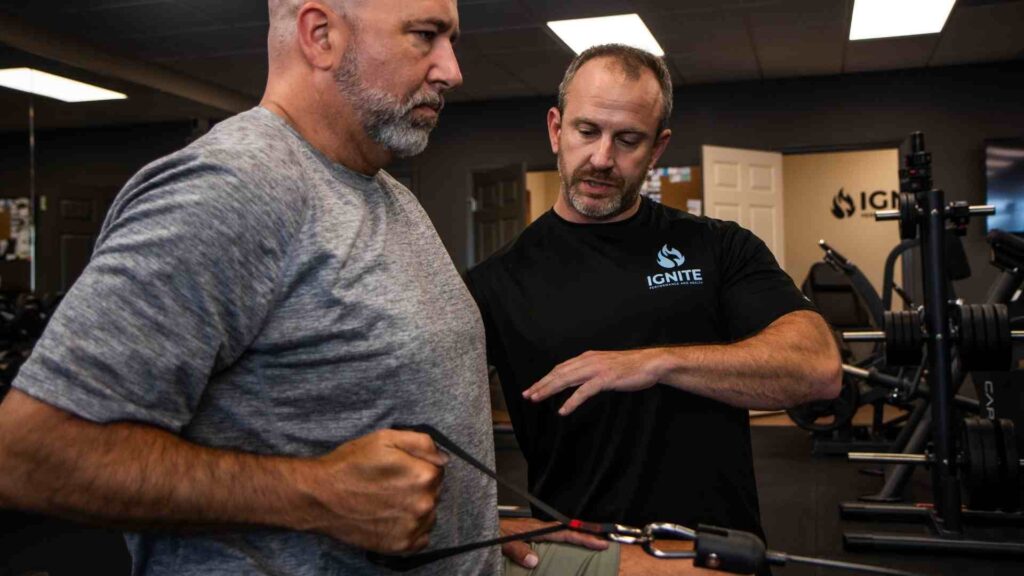
Guided machines, controlled tempo work, cables, and specific free-weight movements allow you to load muscles progressively and safely. This approach delivers all the metabolic and hormonal benefits of strength training with a dramatically lower risk of injury.
Benefits of this targeted approach include:
- Increased Insulin Sensitivity: Stronger muscles are better at absorbing glucose from the bloodstream, which helps stabilize blood sugar levels and reduce the risk of type 2 diabetes.
- Elevated Resting Metabolic Rate (RMR): Muscle tissue burns more calories at rest than fat tissue. By increasing your muscle mass, you effectively turn up your body’s furnace, burning more calories throughout the day.
- Improved Hormonal Profile: Resistance training can help optimize hormones like testosterone and growth hormone, which are vital for energy, body composition, and overall well-being.
Beyond Muscle: Real-World Benefits of Strength
While achieving optimal metabolic health is a significant victory, the advantages of strength training extend far beyond that. A consistent routine restores your ability to move, bend, lift, and carry with confidence. It actively supports posture, balance, bone density, and even cognitive health, all critical factors that determine how well you age.
Building a Resilient Body for Life
Investing in strength is an investment in your future self, keeping you mobile, capable, and confident for decades. Key benefits include:
- Enhanced Joint Integrity: By strengthening the muscles and connective tissues that support your joints, you create a natural cushion. This reinforcement helps absorb shock and reduces the grinding and friction that can lead to chronic pain and arthritis.
- Improved Balance and Control: Many joint-friendly workouts involve controlled, multi-plane movements. This type of training improves your coordination and proprioception (your body’s awareness in space), significantly reducing the risk of falls, a leading cause of serious injury in later life.
- Increased Bone Density: Smart resistance training safely stresses your bones, signaling them to rebuild stronger and denser. This process, known as bone remodeling, is a powerful defense against osteoporosis and frailty.
The Hidden Benefit: Confidence and Control
There is a unique and powerful feeling that comes with getting stronger, especially when that strength is earned safely and intentionally. As you progress, you’ll notice more than just physical changes. You will rediscover a sense of capability that may have faded over time.
Lifting a weight you once couldn’t, finishing a session without pain, or seeing muscle definition return are tangible wins. These accomplishments rebuild self-trust and confidence that permeates all areas of your life. This process becomes part of your identity. It’s not about chasing extreme goals; it’s about proving to yourself that your best years are still ahead of you.
How to Train for Strength After 40: The Smart Way
Forget the outdated notion that getting stronger requires you to throw heavy barbells around. Effective strength training over 40 is about precision, progression, and protection.
- Prioritize Controlled, Joint-Friendly Movements: Build muscle through smart resistance. Use machines, cables, suspension systems, and guided free weights that isolate muscle groups safely. Movements like leg presses, chest-supported rows, and cable presses can replace higher-risk barbell lifts while targeting the same muscles with better form and alignment.
- Focus on Time Under Tension, Not Just Load: Emphasize the controlled, slower “negative” phase of a lift (eccentric contraction). Combine this with proper breathing and posture. This method stimulates muscle growth and enhances neuromuscular control, which is especially important for those managing previous injuries or hormonal transitions.
- Train Consistently, Not Excessively: Two to three well-structured, full-body sessions per week are often enough to stimulate significant strength and metabolic improvements. The key is consistency over intensity. Tailor workouts, intensity, and rest periods to your individual physiology and goals.
- Respect Recovery: Muscle growth happens during recovery, not during the workout itself. Your program should include structured rest days, deload weeks, and guidance on sleep optimization and nutrition. This holistic approach promotes repair, supports hormonal balance, and ensures long-term adherence.
The Bottom Line
Strength training over 40 is no longer optional, it is the foundation of your healthspan. But how you train matters more than ever.
Replacing high-risk, ego-driven lifting with precision, science-based resistance protocols will maximize your results while minimizing your risk of injury. The goal is not to move the most weight; it is to move the right way for the rest of your life. Building a stronger, leaner, and more capable body is the key to ensuring you can keep doing what you love for decades to come.